Filtrar contenido
Del zapato común al instrumento flamenco
La evolución del zapato cotidiano a instrumento de percusión
El calzado flamenco no siempre fue el sofisticado instrumento sonoro que conocemos hoy. En sus orígenes, las bailaoras y bailaores flamencos utilizaban el calzado de uso diario: zapatos sencillos de cuero e incluso alpargatas. El baile aún no se había profesionalizado y el zapateado no tenía el protagonismo técnico y escénico que alcanzaría más adelante.
Fue en el siglo XIX, con el auge de los cafés cantantes, cuando el flamenco comenzó a consolidarse como espectáculo profesional. La creciente exigencia escénica impulsó una transformación del vestuario y, especialmente, del calzado. El zapato dejó de ser un complemento para convertirse en una herramienta fundamental del baile flamenco.
La incorporación del claveteado: el gran punto de inflexión
Uno de los hitos más importantes en la evolución del calzado flamenco fue la incorporación de clavos metálicos en la puntera y el tacón. A mediados del siglo XX, los artesanos comenzaron a introducir pequeños clavos de acero pulido para amplificar el sonido del zapateado.
Esta innovación fue decisiva. Permitió que la percusión de los pies tuviera la potencia suficiente para dialogar con la guitarra y el cante flamenco sin necesidad de amplificación. El zapato se transformó así en un auténtico instrumento musical.
El sonido dejó de depender únicamente de la fuerza del bailaor: ahora intervenían también la técnica de fabricación, la colocación de los clavos y la calidad del material.
Materiales y estructura: resistencia y precisión
Con la profesionalización del flamenco, el diseño del zapato evolucionó hacia estructuras más resistentes. El cuero de alta calidad, como el box-calf, se convirtió en uno de los materiales más utilizados por su durabilidad y capacidad de adaptación al pie. El ante también ganó popularidad, especialmente por su estética y flexibilidad.
La puntera empezó a reforzarse internamente para soportar impactos constantes. La suela se endureció y se perfeccionó la construcción del tacón, buscando una mayor estabilidad y una respuesta sonora más limpia.
Cada detalle comenzó a tener una función concreta: proteger el pie, potenciar el sonido y garantizar equilibrio en giros y desplantes.
La diversificación de los tacones en el flamenco
No todos los estilos flamencos requieren la misma respuesta sonora ni la misma postura corporal. Por ello, surgieron distintos tipos de tacón.
El tacón carrete, más ancho en la base, aporta estabilidad y contundencia sonora. El recto ofrece una línea más estilizada y un sonido más seco. El cubano, habitual en botas masculinas, proporciona firmeza y potencia en los golpes.
La elección del tacón influye directamente en la estética del baile y en la comodidad del intérprete.
Personalización y moda sin perder la tradición
En las últimas décadas, el calzado flamenco ha incorporado elementos estéticos que conviven con la tradición artesanal. Firmas especializadas en este tipo de calzado, han introducido pieles de colores, diseños calados, combinaciones de texturas y sistemas elásticos que mejoran el ajuste.
Sin embargo, detrás de cada innovación estética sigue existiendo un proceso artesanal riguroso. La funcionalidad continúa siendo prioritaria: el zapato debe sonar bien, durar y proteger la salud del bailaor flamenco.
La moda se integra, pero nunca sustituye a la técnica.
Hoy en día, un zapato flamenco profesional incorpora varios elementos técnicos clave:
- Filis: una capa de goma antideslizante en la suela que mejora el agarre sobre el tablao flamenco.
- Doble suela: aumenta la sonoridad y la resistencia al desgaste.
- Claveteado pulido: clavos limados cuidadosamente para no dañar los suelos de madera.
- Planta acolchada: fundamental para absorber parte del impacto y proteger articulaciones.
La ergonomía se ha convertido en un aspecto esencial. El zapateado implica impactos repetidos que pueden afectar a rodillas, tobillos y espalda si el calzado no es adecuado.
Un instrumento al servicio del arte
La evolución del calzado flamenco refleja la propia evolución del flamenco como arte escénico. De la improvisación popular a la precisión técnica contemporánea, el zapato flamenco ha acompañado cada etapa.
Hoy no se concibe un espectáculo flamenco sin el sonido firme y rítmico del zapateado. Ese sonido nace tanto del talento del artista flamenco como de la ingeniería artesanal del calzado.
El zapato flamenco ya no es solo un complemento: es ritmo, fuerza y expresión.
La presencia del tacón en Teatro Flamenco Málaga
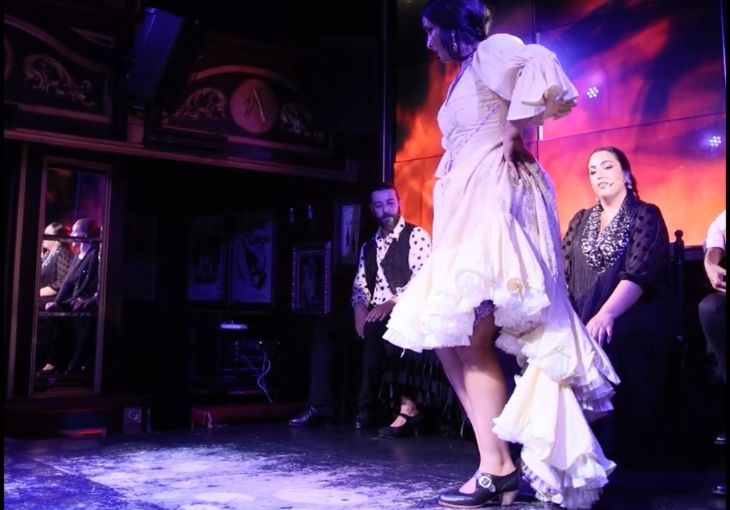
En los espectáculos de Teatro Flamenco Málaga, el tacón no es solo parte del vestuario, sino uno de los grandes protagonistas que acompaña los movimientos de nuestros bailaores flamencos, aportando al espectáculo ritmo, fuerza y expresión.
Ver zapatear en directo a los bailaores sobre el tablao flamenco es asistir a un espectáculo flamenco donde la tradición, la historia y la emoción se fusionan entre sí.