Filtrar contenido
Diccionario de flamenco: algunos términos propios
Diccionario básico del flamenco: términos esenciales que debes saber
Una guía para comprender mejor el arte flamenco y disfrutarlo en directo
El flamenco es un arte con una riqueza propia que va más allá del cante, el toque y el baile. Su historia, su transmisión oral y su evolución han dado lugar a un lenguaje específico que muchas veces no se comprende del todo si no se está familiarizado con él. En Teatro Flamenco Málaga, creemos que conocer algunos de estos términos puede enriquecer la experiencia del espectador, permitiéndole apreciar con mayor profundidad lo que ocurre en el escenario.
¿Por qué un diccionario de flamenco?
Muchos asistentes a nuestras funciones, especialmente quienes se acercan por primera vez al flamenco, se preguntan qué significan palabras como “duende”, “jaleo” o “compás”. Algunas de estas expresiones se usan dentro y fuera del escenario, mientras que otras forman parte de la técnica misma del arte.
Conocer estos términos ayuda a interpretar mejor los gestos del bailaor, los cambios de ritmo del guitarrista o las emociones del cantaor. Y si bien no es necesario saber todo para emocionarse con un buen espectáculo, tener algunas nociones básicas puede ser muy útil para disfrutarlo de manera más consciente.
Términos esenciales del flamenco
Duende: Probablemente uno de los términos más conocidos del flamenco, aunque también uno de los más difíciles de definir. El “duende” es una especie de fuerza o inspiración especial que aparece durante una interpretación y que genera una conexión emocional intensa con el público. No todos los momentos flamencos tienen duende, pero cuando aparece, es inolvidable.
Compás: Es la base rítmica sobre la que se construye el flamenco. Cada palo (o estilo flamenco) tiene su propio compás, que puede variar en complejidad. Algunos de los compases más conocidos son los de bulería (12 tiempos), soleá o tango (4 tiempos). Mantener el compás correctamente es fundamental en cualquier interpretación.
Palo: Se denomina así a cada uno de los estilos dentro del flamenco. Hay decenas de palos, como la soleá, la seguiriya, la alegría, la bulería o los tangos. Cada uno tiene una estructura rítmica específica, un carácter particular y una historia propia. Algunos son más solemnes, otros más festivos.
Cante: Hace referencia al canto flamenco, una de las tres formas principales del arte (junto al baile y al toque). El cantaor o cantaora transmite emociones profundas con una voz que, muchas veces, parece quebrarse o tensarse, algo que forma parte de su expresividad.
Toque: Es la forma en la que se denomina a la guitarra flamenca. El toque acompaña al cante y al baile, y en muchas ocasiones, también tiene momentos de protagonismo. El guitarrista no solo marca el compás, sino que también dialoga con los demás artistas en escena.
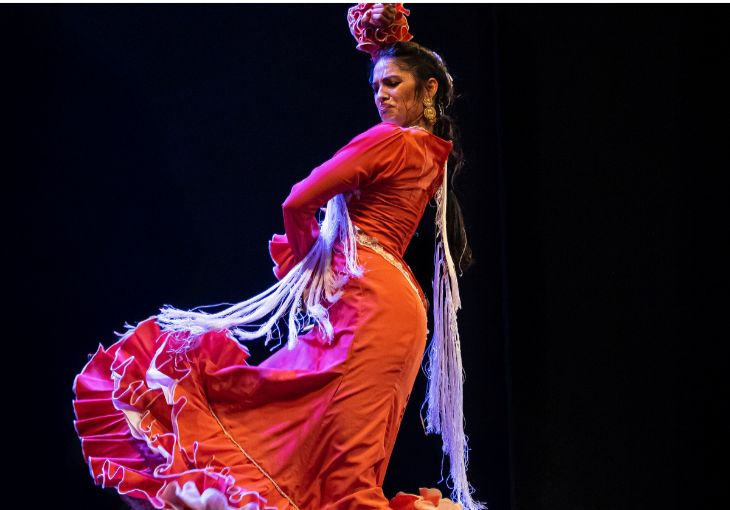
Baile: El bailaor o la bailaora expresa con su cuerpo lo que el cante y el toque transmiten. A través del zapateado, los giros, el braceo y la postura, se construye una narrativa corporal que conecta con el espectador. El baile flamenco tiene tanto fuerza como elegancia, y cada estilo tiene su forma particular de ser interpretado.
Jaleo: Son las expresiones verbales o gestuales que animan a los artistas durante su actuación. Frases como “¡olé!” o “¡eso es!” forman parte del jaleo, que puede venir del público o de los mismos compañeros en escena. El jaleo no interrumpe, sino que acompaña y realza el momento artístico.
Palmas: Además del cante y la guitarra, las palmas son una parte esencial del ritmo flamenco. Existen distintos tipos de palmas, como las sordas o las abiertas, y se usan para marcar el compás o resaltar partes de la interpretación. Las palmas también requieren técnica y precisión.
Tablao: El espacio donde se representan los espectáculos flamencos. Tradicionalmente, un tablao es un escenario íntimo, con cercanía entre artistas y público, lo que permite una experiencia más directa y emocional. En Teatro Flamenco Málaga, ofrecemos esta cercanía en cada función.
Zapateado: Es el juego rítmico que se produce con los pies. El bailaor golpea el suelo con distintas partes del pie, generando un acompañamiento sonoro que refuerza el ritmo y aporta intensidad al baile.
Estos son solo algunos de los términos que definen el universo flamenco. Existen muchos más, algunos específicos de ciertos palos o regiones, y otros que surgen de la práctica cotidiana entre artistas. Lo importante es entender que este lenguaje no es algo cerrado ni académico, sino parte de una tradición viva que se transmite en cada función, en cada ensayo y en cada tablao.
En Teatro Flamenco Málaga, no es necesario conocer todos estos conceptos para emocionarse. Sin embargo, creemos que este pequeño diccionario puede servir como punto de partida para acercarse al flamenco con mayor profundidad y respeto. Nuestra programación está pensada para que cualquier persona, sin importar su conocimiento previo, se sienta bienvenida a vivir el arte flamenco en directo.